7–16 Months in Australia: New Home Build Timeline, Lock Selections
A production home typically takes 7 to 10 months from ground break to move-in, while a custom home runs 12 to 16 months, plus another 2 to 6 months of pre-construction planning. The single biggest factor that stretches either timeline is homeowner decision-making, especially late selections on fixtures, finishes, and materials with long lead times.
TL;DR:
- Homeowner decision-making and late selections on fixtures and materials are the main causes of project delays, especially with custom builds.
- Pre-construction tasks like design finalization, soil testing, permits, and loan approval can add 2 to 6 months before construction begins.
- Ordering long-lead items such as windows, cabinets, and appliances early during the build process significantly reduces delays.
- Weather and inspection scheduling are secondary factors; most delays stem from homeowner choices and late procurement.
- Staying in constant communication with your builder and setting clear decision deadlines can keep your project on schedule.
Table of Contents
- New home build timeline: fast track vs typical build
- Pre-construction to-dos and how long they take
- Stage-by-stage construction timeline and what you need to order when
- Why do new home builds run late, and how do you avoid it?
- Who handles approvals and inspections, and how long do they take?
- How financing timelines affect your build budget
- What happens at handover, and how long does it take to move in?
- Practical tips from JC Building Gold Coast
- A builder’s honest take on what really slows a build down
- Want a builder who plans around your timeline, not just their schedule?
- Where to check current permit and building data
- Sources
New home build timeline: fast track vs typical build
Two builds starting on the same day can finish months apart, and the gap almost always comes down to how standardised the design is and how quickly the homeowner locks in decisions.
A production build on a pre-approved plan in an established estate moves fastest because the builder has already ordered materials in bulk and booked trades in sequence. A custom build with unique engineering, bespoke joinery, or an architect-designed layout takes longer at every stage, from council approval through to final fit-out.
- Fast production track: site works and slab in weeks 1 to 4, frame and lock-up by month 3, fixing and finishes through months 4 to 7, handover around month 7 to 8.
- Typical custom build: design and approvals in months 1 to 5, slab and frame in months 6 to 9, lock-up by month 10, finishes and testing through to month 14 or 15.
Quick stat: Across the industry, production homes average 7 to 10 months and custom homes average 12 to 16 months, with pre-construction planning adding a further 2 to 6 months before the first sod is even turned.
Stages overlap more than most people expect. Cabinetry gets measured while tiling is still underway, and electrical fit-off often happens alongside painting. That overlap is exactly why early ordering matters so much.
Pre-construction to-dos and how long they take
Everything before the site is even fenced off can eat 2 to 6 months of your new home build timeline, and most of it depends on you, not your builder.
- Design finalisation. Choosing a pre-drawn plan from a project builder can take two to four weeks. A custom design, with an architect or draftsperson refining floor plans and elevations, commonly takes 6 to 12 weeks before it is ready to submit.
- Site survey and soil test. A geotechnical soil test and contour survey usually take 1 to 2 weeks to book and complete, but the results determine your foundation type and can add cost and time if the site needs extra engineering.
- Permits and approvals. Building approval, and planning permission where required, typically lodges through your builder or a private certifier and can range from a few weeks to several months depending on council workload.
- Construction loan paperwork. Lenders generally need four to six weeks to assess and approve a construction loan, and this often runs in parallel with your design and approval stage rather than after it.
Pro Tip: Get your soil test booked the same week you sign your building contract. It’s one of the cheapest, fastest steps in the whole process, yet it’s the one that most often gets left until someone asks where the foundation drawings are.
Stage-by-stage construction timeline and what you need to order when
Once the site is cleared and permits are through, the physical build follows a fairly consistent sequence, though the exact weeks shift with weather, site conditions, and design complexity.
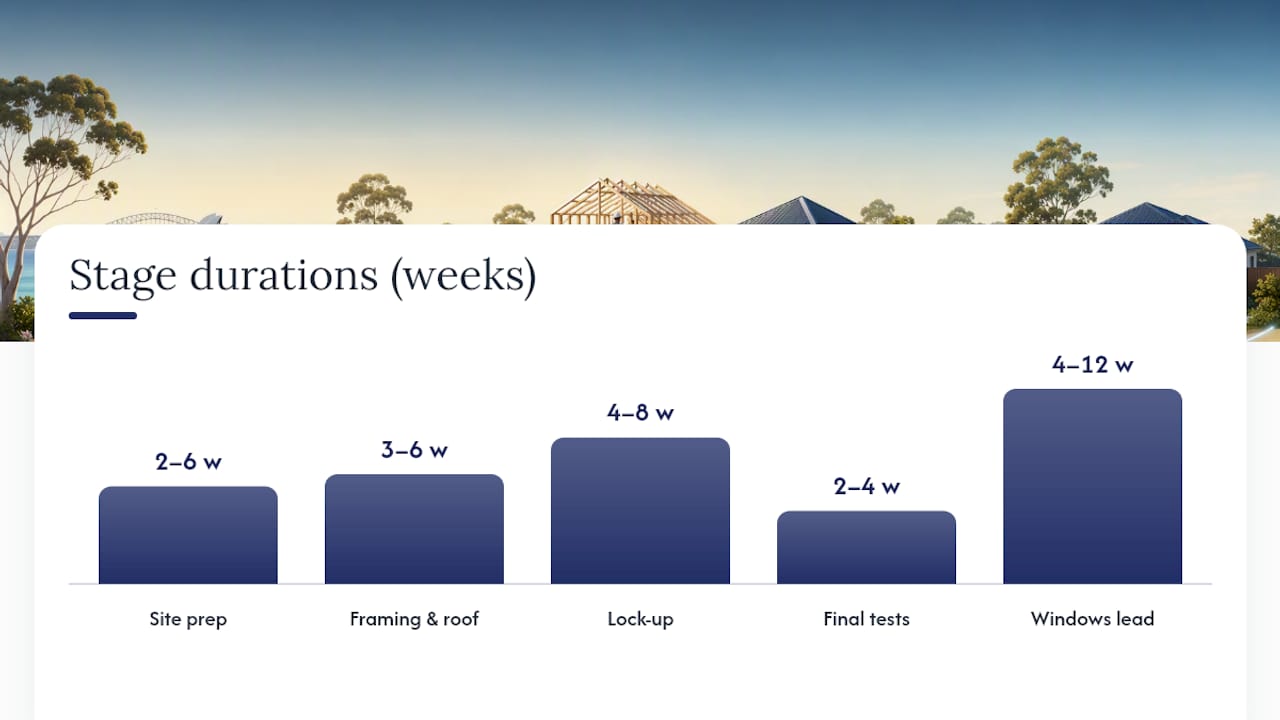
Site preparation and foundations (2 to 6 weeks). Excavation, levelling, and the concrete slab or footings come first. Sloping blocks or reactive clay soils can add extra weeks here, since retaining walls or a raised slab design need more engineering and pour time than a flat, stable site.
Framing and roof (3 to 6 weeks). Timber or steel framing goes up fast on a straightforward single-storey design. Double-storey homes, raked ceilings, or wide open-plan spans need extra bracing and engineering sign-off, which can add a week or two.
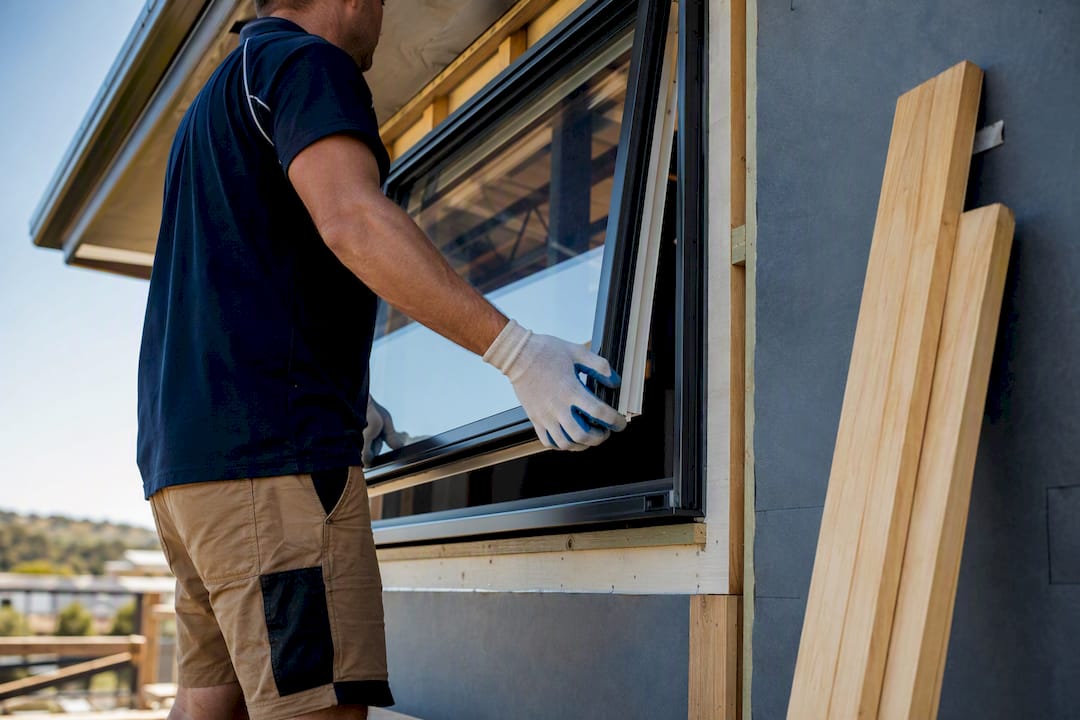
Lock-up (4 to 8 weeks). This covers external walls, roofing, windows, and doors going in, which is when the building starts looking like a house. Window lead times are a common bottleneck: standard sizes might ship in 4 weeks, but custom sizes or double glazing can run to 12 weeks. Order windows the moment your plans are locked in, not when the frame goes up.
Rough-in services (2 to 4 weeks). Plumbers, electricians, and air conditioning contractors run pipes and cabling through the frame before walls close up. Each trade typically needs a council or private inspection before the next one starts, so scheduling clashes here can quietly cost a week or more.
Insulation and internal lining (2 to 3 weeks). Insulation batts and plasterboard go in once rough-ins pass inspection. This stage moves quickly, but plaster needs time to dry and set before painting starts.
- Cabinets and joinery: order by the time framing starts, since custom cabinetry commonly takes 6 to 10 weeks to manufacture.
- Benchtops and tiles: measure once cabinets are confirmed, but lock in your tile selection during lock-up to avoid backorders.
- Appliances: order during framing, particularly for imported or specialty brands with longer freight times.
Fixing and finishes. Painting, flooring, cabinetry installation, and tiling typically occur during this phase. Delays here are common due to the complex coordination of multiple trades and late orders.
Final testing, certification, and handover (2 to 4 weeks). Electrical safety checks, plumbing compliance, and a final building inspection all need to pass before your certificate of occupancy is issued.
Why do new home builds run late, and how do you avoid it?
Most delays trace back to decisions, not weather or trades, and the fix is almost always earlier action rather than a bigger budget.
- Late selections and change orders. Every fixture, tap, or tile you haven’t chosen by the checkpoint your builder sets becomes a hold-up. Lock in selections before slab down, not during fixing.
- Material and appliance lead times. Custom cabinets, imported tiles, and speciality appliances can carry lead times measured in months rather than weeks, and ordering late is one of the most common avoidable causes of schedule slip.
- Subcontractor and inspection bottlenecks. Ask your builder directly how they book critical trades. Builders who secure electricians and plumbers early, and hold deposits to lock in dates, tend to run tighter schedules than those who book trades as each stage finishes.
- Weather windows. Wet season delays to slab pours and roofing are common in Queensland, and extreme weather events are becoming more frequent, so build a buffer into any timeline that spans summer.
Pro Tip: Ask your builder for a “selections deadline sheet” at contract signing, listing the exact date each item needs to be chosen by. It turns a vague worry into a concrete calendar entry.
Who handles approvals and inspections, and how long do they take?
Your builder or a private certifier typically lodges building approval on your behalf, while planning permits (needed for non-standard designs, heritage overlays, or larger blocks) usually go through the local council.
- Standard building approvals can clear in a few weeks; planning permits with public notification periods can stretch to several months.
- Key inspections happen after slab, after frame, at rough-in, and before handover, each needing a pass before the next stage starts.
- Keep your contract, insurance certificates, and soil report on hand. Certifiers move faster when documents are ready on request, not chased down.
Checking current approval activity through the ABS building approvals data gives a rough sense of how busy your local council or certifier is likely to be.
How financing timelines affect your build budget
Construction loans generally take four to six weeks to approve, and lenders draw down funds in stages as each phase of the build is completed and inspected.
Quick stat: Construction loan interest typically sits 1 to 2 percentage points above a standard mortgage, so every extra month on site adds real, compounding cost, not just inconvenience.
Underestimating carrying costs is one of the most common budgeting mistakes on longer custom builds.
What happens at handover, and how long does it take to move in?
Once construction finishes, your builder walks the property with you to compile a snag list, generally items like paint touch ups, door alignment, or minor tiling fixes.
- Most snag lists are rectified within 2 to 4 weeks of handover.
- Final certificates and utility connections (power, water, NBN) are usually arranged in the final fortnight before keys are handed over.
- Check smoke alarms, warranty documentation, and appliance manuals as part of your move-in walkthrough.
Practical tips from JC Building Gold Coast
One of the biggest time-savers in building is simple: lock in selections before the slab goes down, not during fixing. Fixed decision checkpoints and ordering long-lead items like windows and cabinetry early help avoid delays. We also recommend homeowners keep a weekly check-in with their site supervisor, even a five-minute call, since small questions answered early stop big delays later.
A builder’s honest take on what really slows a build down
Homeowners rarely delay a build on purpose. They delay it by taking three extra weeks to pick a tap, or by changing a benchtop colour after the cabinets are already ordered. None of that is unreasonable. It’s just expensive in time. The fix isn’t more willpower, it’s a checklist and a deadline sheet you agree to before the slab is even poured. Builds that stay on schedule are usually the ones where the homeowner and builder talk often, not just at the big milestones.
— Scott
Want a builder who plans around your timeline, not just their schedule?
If you’ve read this far, you already know the honest truth: the biggest risk to your new home build timeline usually isn’t the trades, it’s how early decisions get locked in and materials get ordered. This is a common challenge builders address by running a consultative process that sets selection deadlines up front, books critical trades early, and keeps clients informed at every stage to avoid uncertainty.
Whether you’re planning a straightforward production-style home or a fully custom design, our new build services are built around the same principle this article has covered: fewer surprises, fewer late-stage scrambles, and a schedule you can actually rely on. If your project also involves a kitchen or bathroom fit-out with long-lead cabinetry and benchtops, our kitchen and bathroom renovation team coordinates those lead times alongside your build. Get in touch for a consultation and we’ll map out a realistic schedule for your specific site and design before you sign anything.
Where to check current permit and building data
For up-to-date figures on building activity, the ABS building approvals release tracks national approval volumes, while the YourHome government guide covers practical build-house guidance for Australian homeowners.
Sources
- How Long Does It Take to Build a House in 2026? | Buildermuse
- Common reasons building approvals are delayed — AllSpec Approvals
- Construction loan financing — Morgan’s Mortgages
- The Complete Home Building Timeline: What to Expect Month by Month - BuildWithEmil
- Building approvals, Australia — ABS